Architecture
Architecture Blog
Page 2/4

Idempotency for AI Agents
Why retries, partial failures, and long-running agent loops make idempotent actions, reconciliation, and explicit operation identity essential.- Published on

Human Approval Is an Architectural Boundary
How to place human judgment at consequential transitions without turning AI workflows into notification queues or rubber-stamp theater.- Published on

Agent Memory Without the Mythology
A practical architecture for AI memory built from working state, durable facts, episodic records, retrieval policy, and deliberate forgetting.- Published on

Context Engineering Is Interface Design
How to design the information boundary around an AI agent so instructions, evidence, tools, and working state remain legible under pressure.- Published on

Composable AI Systems: Architecture That Can Change Without Losing Control
A practical architecture for building AI systems from bounded capabilities, explicit contracts, least-privilege tools, durable state, and verification gates.- Published on

The Agent Harness Is the Real Product
Why model capability only becomes dependable work through a harness that manages context, tools, state, permissions, recovery, and verification.- Published on
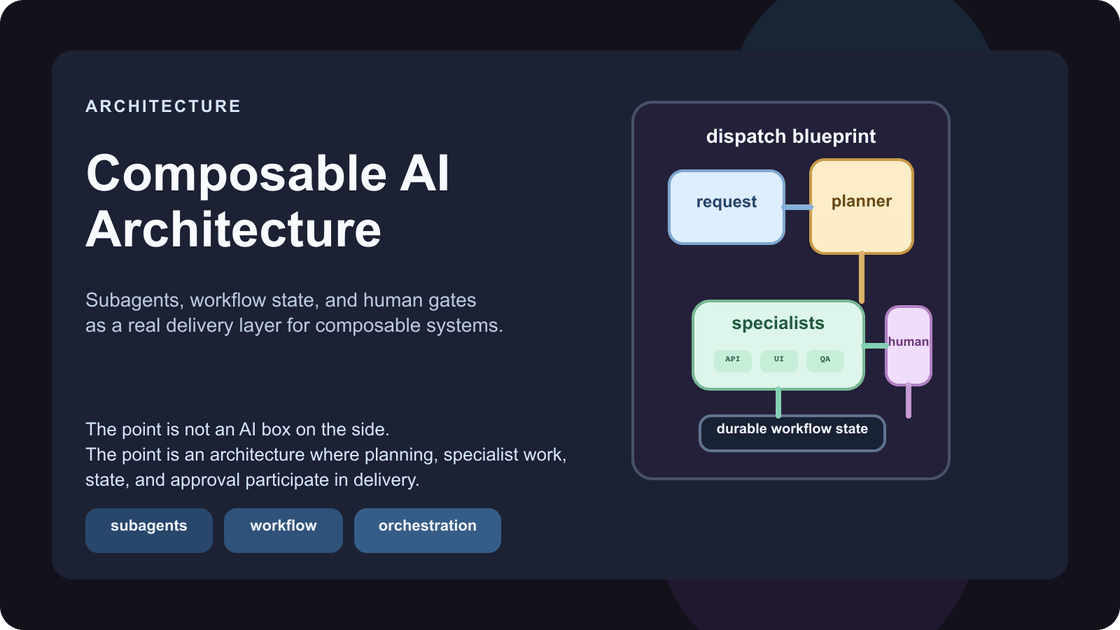
Composable AI Architecture
How subagents, workflow orchestration, and durable state turn AI from a bolt-on assistant into a composable delivery capability.- Published on
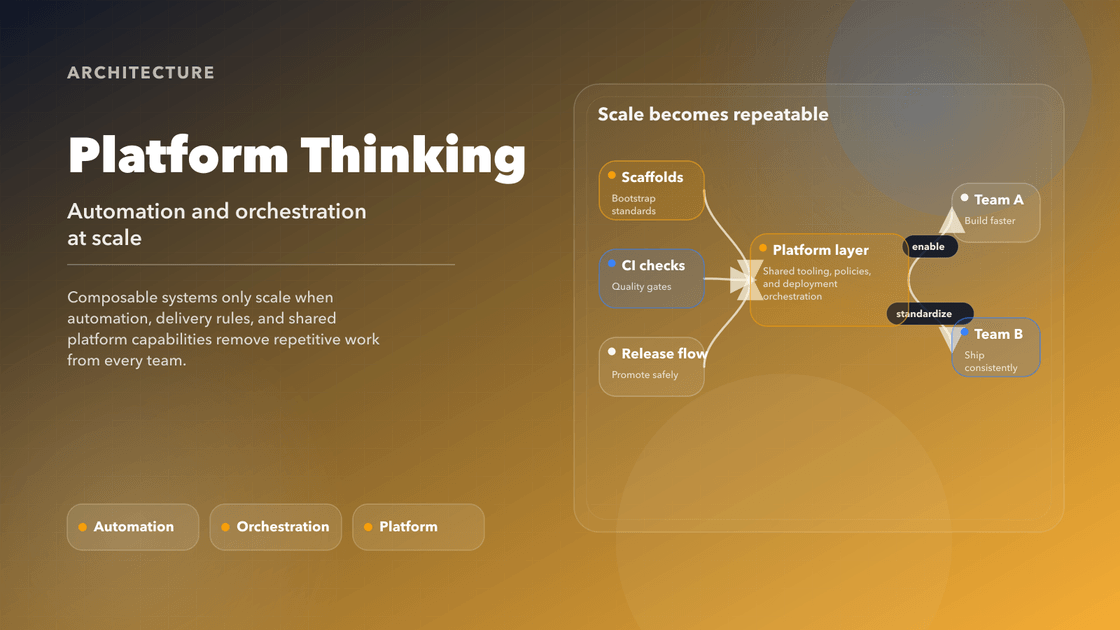
Automation, Orchestration, and Platform Thinking
Why composable systems only scale when automation, orchestration, and platform tooling remove repetitive coordination.- Published on
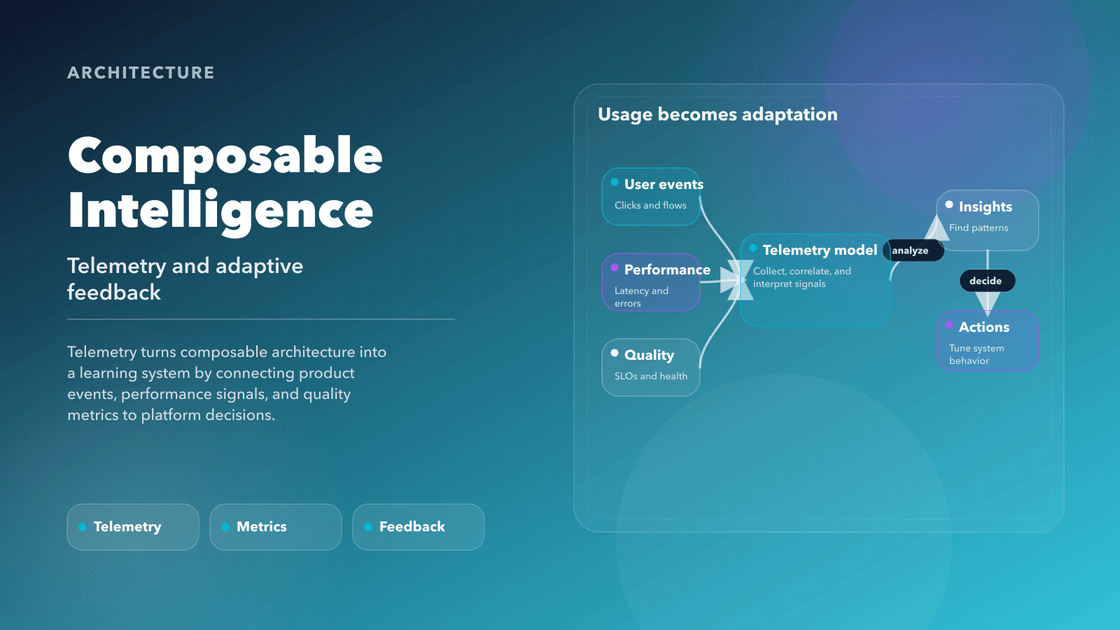
Composable Intelligence — Observability, Metrics, and Adaptive Feedback Loops
How telemetry, dashboards, and feedback loops turn a composable frontend into a learning system.- Published on